What is obstacle avoidance?
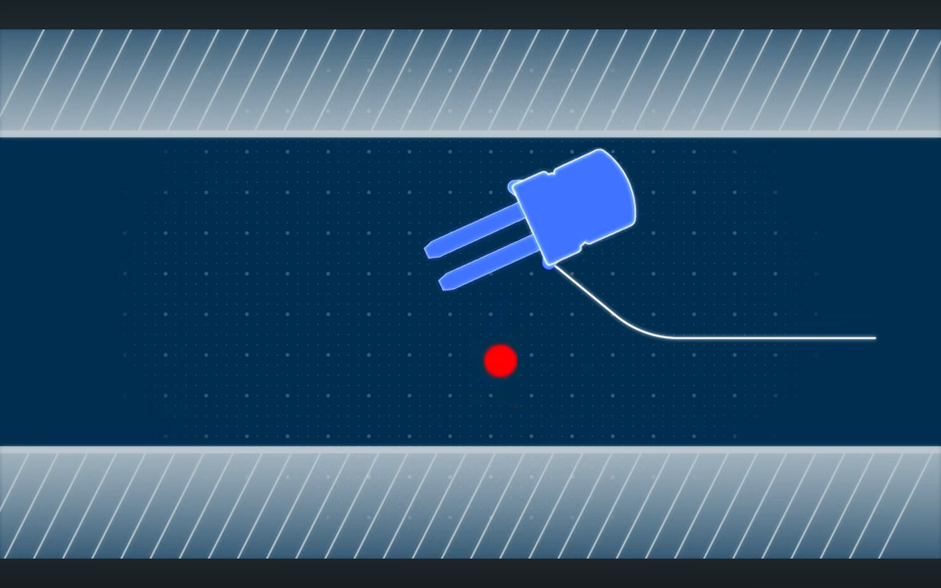
Obstacle avoidance refers to the ability of a mobile robot — e.g., an AMR or AGV — to perceive an obstacle in its path and then dynamically move around this obstacle to reach its target location (such as a pick/drop point or a piece of equipment).
Obstacle avoidance functionality is most often associated with AMRs, while AGVs follow either virtual or physical paths. This is due to the American safety standard For Industrial Mobile Robots – Safety Requirements ANSI/RIA R15.08-1-2020 (R15.08), which explains: “The fundamental difference between AGVs and AMRs is characterized by how they traverse the specified operating environment. An AGV traverses the specified operating environment automatically along predefined guide paths (virtual or physical) using collision avoidance.” By contrast, the standard defines AMRs as being able to “traverse the specified operating environment by detecting obstacles using sensors and adjusting paths by computing an obstacle-free path through free space rather than using a predefined path.”
When is obstacle avoidance useful?
Many material handling professionals assume obstacle avoidance is the most efficient way for an automated vehicle to navigate around a site. This, in our experience at BlueBotics, however, is not always the case.
In many scenarios, it is much more efficient to have well-trained staff which remove blockages as soon as a robot stops and beeps, versus robots choosing to go where they like and getting stuck or causing further blockages as a result. This is especially true if a site is complex and very tight on space, such as many brownfield production plants.
However, it is true that not every site’s staff are well trained. Indeed, some highly automated sites simply don’t have that many staff around to help. The risk then is that an AGV might stop, wait, and keep waiting… impacting transport times and the overall productivity of a customer’s operation.
However, using only obstacle avoidance to mitigate this risk presents its own challenges too…
What are the problems with obstacle avoidance?
‘Pure’ obstacle avoidance, meaning dynamic avoidance with no limits, can create more problems than it solves, especially on space-constrained sites.
These issues include:
- Speed: Since a pure obstacle avoidance approach requires a robot to be continually sensing and analyzing its environment – on the lookout for blockages and calculating alternate routes – its default driving speed is usually slower than that of an AGV that follows virtual paths by default.
- Traffic deadlocks: Most vehicles that use obstacle avoidance have little, if any, traffic management built into their system. In other words, they operate entirely independently when trying to reach their destination. This means that when there are several vehicles in one space all trying to get to their destination traffic deadlocks can, and do, happen; just as they would, for example, if drivers on the road suddenly stopped following traffic rules.
- Low fleet efficiency: Combined, the two reasons above can have a hugely negative impact on the efficiency of a mobile robot system, lengthening transport times and leading to unpredictable behaviors that are not acceptable in demanding, time-sensitive factory and warehouse environments.
To try and reduce the number of deadlocks, some AMR producers add low-level traffic behaviors on top of their default obstacle avoidance approach, such as ‘preferred direction’ and ‘exclusion’ zones. However, these measures usually deliver only marginal gains.
How does the obstacle avoidance inside ‘ANT driven’ vehicles work?
The obstacle avoidance functionality inside vehicles driven by ANT navigation is called SmartPass.
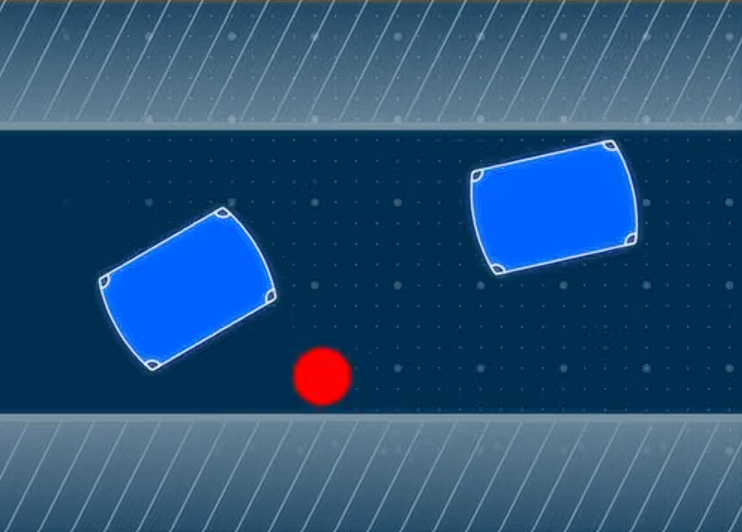
SmartPass effectively ‘bridges the gap’ between AGV- and AMR-style operation. This means ANT driven vehicles follow virtual paths most of the time — for efficient, robust, and repeatable AGV-style operation — but if a blockage is detected, SmartPass enables a smart, limited obstacle avoidance maneuver. The goal being to return to a vehicle’s virtual path as quickly as possible.
This approach helps ANT driven installations avoid both the challenges above: avoiding AGV-style transport delays when there is a blockage, while also avoiding AMR-style traffic deadlocks and low vehicle speeds.
By adding highly configurable obstacle avoidance to ANT navigation’s default ‘virtual path follower’ mode, this ensures the powerful traffic management features of BlueBotics’ ANT server fleet manager are also applied to SmartPass maneuvers.
This SmartPass video explains more:
3 key benefits of SmartPass
The SmartPass functionality inside ANT driven vehicles offers three key user benefits:
1. Efficiency-focused movement
- Vehicles using SmartPass take the shortest route around an obstacle — within pre-configured limits — before returning immediately to their virtual paths.
- SmartPass-enabled vehicles move faster than traditional AMRs. Travelling at optimal speeds and with optimal acceleration, they follow virtual paths and respect clear traffic rules most of the time, switching to slower, more reactive speeds as required.
- Vehicle actions, such as moving an AGV’s forks and communicating with nearby equipment, take place during SmartPass maneuvers. This saves time versus the more common sequential approach.
- SmartPass maneuvers are also blocked near pick/drop points to guarantee precision.
2. Minimizes deadlocks
-
By managing the movements of vehicles within ANT server’s existing traffic management framework, SmartPass guarantees that vehicles only avoid obstacles when there is no risk of blocking another robot — minimizing the chance of deadlocks.
-
Vehicles only move around objects and never around other vehicles, a further cause of deadlocks.
3. Fully configurable
-
SmartPass can be configured to suit every customer’s site and operational needs. Working with your integrator you can define, for example, the maximum distance a vehicle is permitted to travel from its virtual path; the areas (and even individual routes) of a site where SmartPass cannot be used; and vehicle-specific parameters such as the exact distance to stop before an obstacle.
-
SmartPass is included with every ‘ANT driven’ vehicle. Speak to your integrator about how it can best be used with your specific installation. How-to guides and support (online or on-site) is also available from BlueBotics.
Learn more
To discuss SmartPass or ANT driven vehicles in general, get in touch.